The Pain Isn't Bad Luck — It's Your Setup
You rest. You ice. You take breaks. The next session, the wrist pain comes back anyway.
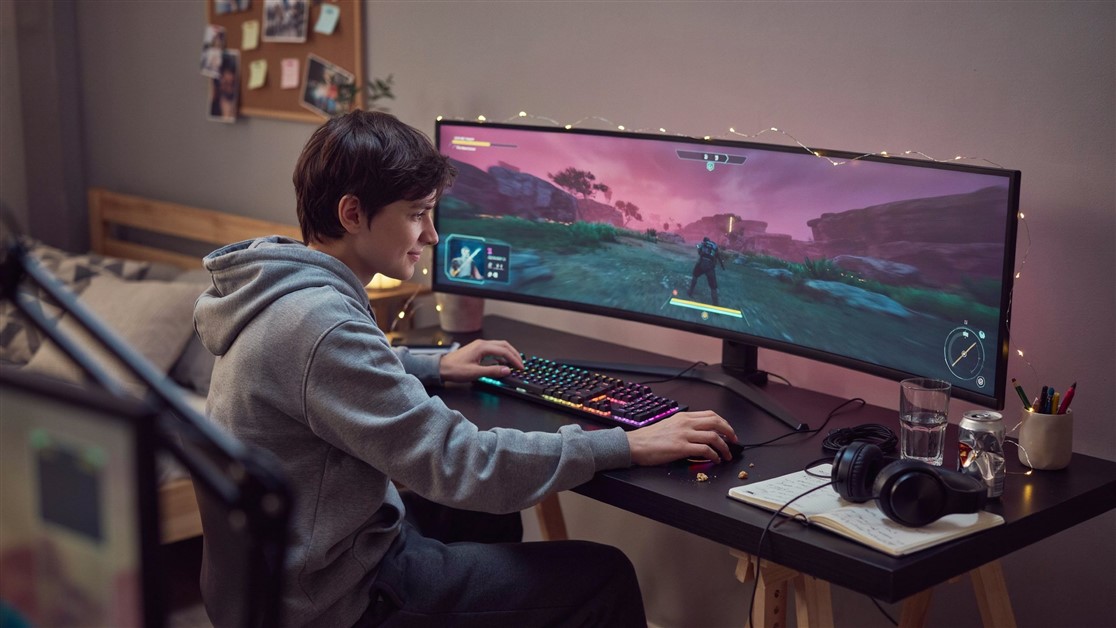
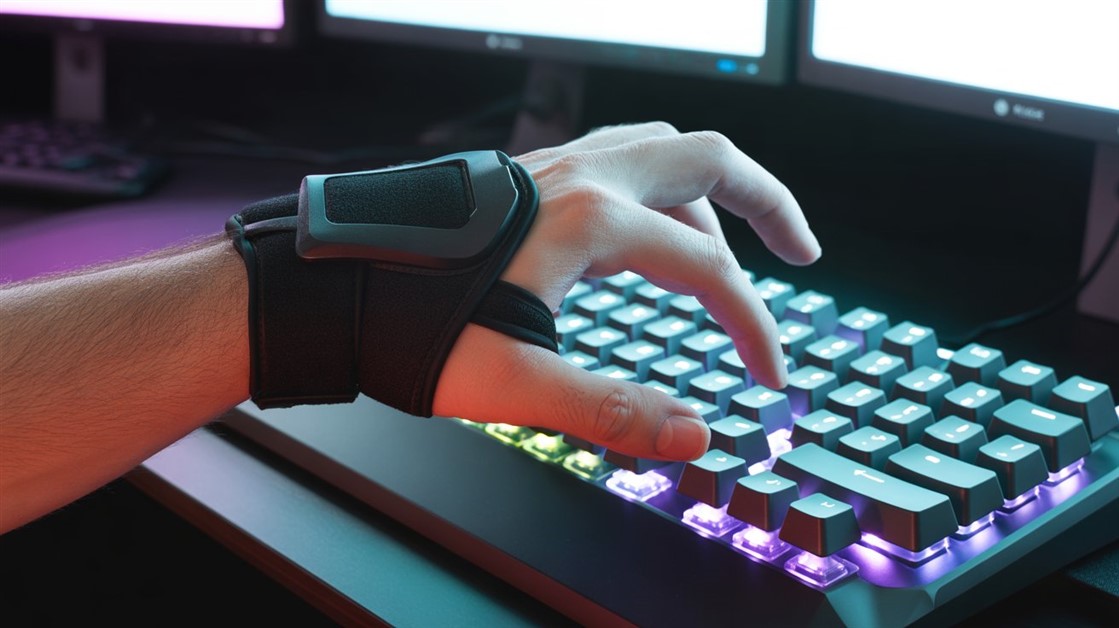
The advice to "just take breaks" addresses the symptom. The actual problem is geometry: when your wrist rests on a flat desk surface with a mouse on top of it, your hand bends slightly upward to make contact. Hold that angle for three hours and you're holding a sustained wrist extension — the exact position occupational therapists flag as the primary driver of gaming-related wrist strain and repetitive stress injury.
A wrist rest doesn't just add cushion. The right one changes the angle. That's the difference between something that actually works and something that makes the desk slightly softer while the injury continues developing.
What Gamers with Wrist Pain Are Actually Dealing With
In threads across r/MouseReview, r/MousepadReview, and gaming ergonomics communities, the complaints cluster around the same experiences. The most common: people who know something is wrong with their wrist but keep playing through it because stops feel like giving up. By the time the discomfort is significant enough to actually change something, the strain has often been accumulating for months.
The second recurring pattern: buying gel wrist rests and finding them unhelpful or worse. Overly soft gel lets the wrist sink below the neutral position, which means you've changed the surface without changing the angle. The wrist is still extended — it's just extended into something squishier. Users who switch from soft gel to firmer memory foam consistently describe this as the discovery that actually made a difference.
The third: people who game for under two hours without pain, then hit a wall around the three-hour mark as the cumulative effect of sustained extension catches up. This is the threshold where the right wrist support pays off most clearly — not in the first hour where most setups feel fine, but in hours two through four where the gap between a supported and unsupported wrist becomes obvious.
Why Most Solutions Don't Work
Three design problems explain why most wrist rests fail the people who need them most:
- Too soft: Gel and foam that compress fully under wrist weight let the wrist settle too low, maintaining the extension rather than correcting it. Firmness is the variable that matters, not material.
- Too hard: Hard plastic rests create pressure points at the wrist's bony edge — a different kind of discomfort caused by restricted blood flow rather than tendon strain. There's no give, so the wrist presses against an edge rather than resting across a surface.
- Wrong position: A wrist rest placed too far forward pulls the wrist into a reach, adding forward extension on top of the existing upward extension. Placement matters as much as the rest itself.
What to Actually Look For
Before choosing a specific product, three specs predict whether a wrist rest will actually address the problem:
- Foam density: Firm enough that your wrist doesn't sink through to the hard surface below, but soft enough to distribute pressure evenly across the wrist rather than concentrating it at a single point. This is the variable that separates functional wrist support from cushioned-but-useless.
- Height relative to mouse: The rest should bring your wrist to approximately the same height as the top of the mouse, creating a straight line from forearm through wrist to hand. Too low and the extension remains; too high and you're bent the other direction.
- Surface coverage: A rest that supports only the wrist joint is less effective than one that supports the lower forearm as well. More contact area means lower pressure per square centimeter, which reduces fatigue during long sessions.
Best Mousepads for Wrist Pain
Best Overall: HyperX Wrist Rest
The HyperX Wrist Rest addresses the density problem directly: its memory foam is firm enough to maintain a neutral wrist angle without letting the wrist sink through, while the cooling gel top layer prevents the texture from becoming uncomfortable during longer sessions. The foam holds its shape under sustained pressure rather than compressing flat, which matters for sessions measured in hours rather than minutes.
In r/MouseReview and gaming ergonomics threads, it's the recommendation that comes up most consistently when people describe their wrist pain improving after a switch. The specific feature owners mention most: the foam stays where it belongs — it doesn't bottom out at the two-hour mark the way softer budget options do.
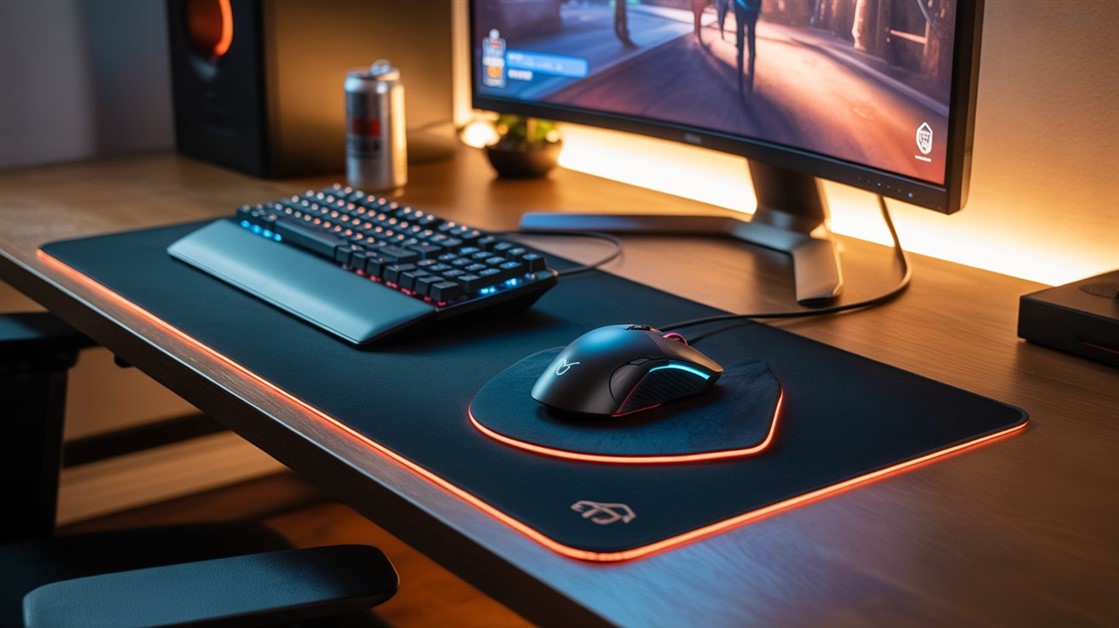
It pairs well with full-size gaming mousepads, sitting along the front edge where the wrist naturally lands. The anti-slip base keeps it from migrating during sessions.
- The friction it removes: The sustained wrist extension that accumulates into pain over long sessions. After two or three sessions, most users report a noticeable reduction in the discomfort that previously appeared around the two-hour mark.
The reality check: The cooling gel effect fades after an hour or two under sustained contact — the pad warms up. It's still comfortable, but the cooling sensation isn't a long-session feature. Also: memory foam compresses over time; with heavy daily use, expect to replace it after a year or two.
👉 Check Current Price → HyperX Wrist Rest
Best Budget Pick: Gimars Mousepad with Wrist Support
The Gimars pad applies the same ergonomic principle — firm foam at a height that maintains neutral wrist alignment — at a meaningfully lower price. The Lycra fabric surface provides a smooth glide rather than a sticky or rough texture that catches on the wrist during mouse movements. For people who want to confirm that wrist support actually makes a difference in their case before committing to something more expensive, this is the low-risk starting point.
The tradeoff is longevity: the foam compresses faster than the HyperX, typically flattening noticeably within six to twelve months of regular use. Once it bottoms out, the ergonomic benefit disappears. It's a useful proof-of-concept purchase, but not the long-term solution if your sessions are daily and long.
- The friction it removes: The upfront cost of testing whether wrist support actually addresses your specific pain pattern before investing in a premium option.
The reality check: Budget foam has a shorter functional life under heavy use. If the Gimars solves your wrist pain, consider it a confirmation step and budget for the upgrade — the ergonomic benefit degrades as the foam compresses.
👉 Check Price on Amazon → Gimars Mousepad with Wrist Support
Best Premium Pick: 3M Precise Mousing Surface with Gel Wrist Rest
The 3M Precise takes a different approach: a dual-layer gel construction with a firmer base and softer top, which avoids both the sink-through problem of fully soft gel and the pressure-point problem of hard rests. The result is consistent support across the wrist contact area rather than concentrated pressure at the wrist joint.
The micro-textured mousing surface is worth noting as a feature beyond the wrist rest itself — it provides finer mouse tracking feedback than cloth surfaces, which matters for precision work or gaming that involves fine cursor movements. The cover is washable, which extends the product's usable life significantly compared to foam alternatives.
For users with existing strain symptoms who need sustained support across long daily sessions, the dual-layer gel construction holds up better than foam over time and distributes pressure more evenly.
- The friction it removes: The pressure concentration at the wrist joint that causes discomfort in single-contact-point rests. The larger surface area means more even distribution across the forearm and wrist.
The reality check: The firm gel base feels noticeably harder than memory foam — if you're used to plush wrist rests, it takes adjustment. It's also the most expensive option here by a significant margin. The investment makes sense for heavy daily users; for occasional gaming, the HyperX provides comparable support at lower cost.
👉 Check Current Price → 3M Precise Mousepad Gel Wrist Rest
Note: This article covers ergonomic setup adjustments for general informational purposes only. If you're dealing with a diagnosed condition such as carpal tunnel syndrome or RSI, consult a physiotherapist or occupational therapist — equipment changes alone may not be sufficient.
Placement Matters as Much as the Product
The most common setup mistake: placing the wrist rest too far forward, so your wrist has to reach ahead to rest on it. This adds forward extension to the existing upward extension — compounding the problem rather than solving it.
Correct placement puts the wrist rest at the front edge of the desk or mousepad, where your wrist lands naturally when your arm is in a relaxed position. Your elbow should be at roughly 90 degrees, and the line from your forearm through your wrist to your hand should be approximately straight when your hand rests on the mouse. The rest brings your wrist up to meet the mouse — not forward to reach for a rest that's too far away.
If correcting the wrist angle helps but you're still experiencing fatigue during long sessions, the problem may extend to overall chair and monitor positioning. The guide on gaming chairs and seat positioning covers how chair height and hip angle affect everything from lower back tension to arm positioning.
FAQ
Do I actually need an ergonomic mousepad?
If your sessions are under an hour and you have no wrist pain, probably not — the geometry problem accumulates over time, and short sessions give your wrist enough recovery time between them. If you game two or more hours at a stretch and notice any wrist discomfort during or after, the angle issue is almost certainly contributing. A wrist rest that maintains neutral alignment is the lowest-cost first change to make.
Is memory foam or gel better for wrist pain?
Firmness matters more than material. Soft gel that compresses fully is worse than firm foam that holds its shape — the relevant variable is whether the rest maintains neutral wrist angle under sustained pressure, not what it's made of. The 3M Precise's dual-layer gel works because the base layer is firm enough to resist full compression; a single-layer soft gel doesn't provide the same support regardless of how it feels initially.
Why does my wrist hurt more with a gel wrist rest than without?
If the gel is too soft, your wrist sinks below neutral position — bending down rather than extending up, which is a different angle but still not straight. Some users find that their wrist actually hurts more on soft gel for this reason. The solution is firmer support, not more padding.
How long does it take to notice improvement?
Most users who switch to proper wrist support notice that the pain threshold — the point in a session where discomfort starts — extends within a few sessions. Significant improvement in existing wrist discomfort takes longer, and depends on whether you're catching the problem early or addressing existing strain. If symptoms don't improve after two to three weeks of correct use, a physio or occupational therapist evaluation is worth considering.
Fix the Angle, Not Just the Symptom
Icing your wrist treats what happened in the last session. An ergonomic wrist rest prevents what would have happened in the next one. The geometry is simple: keep your wrist in a neutral position and the mechanical stress that causes wrist extension injury stops accumulating. Most people who make the switch describe the effect as the first time a gaming setup change actually addressed the problem rather than masked it.
Disclosure: We may earn a small commission if you buy through our links — at no extra cost to you. This helps us keep researching gear for gamers with wrist pain.
Do you game with wrist pain? What setup change made the biggest difference for you?






Discussion
(0)Be the first to share your thoughts.