Stop Blaming Your Grip (It's Actually the Controller)
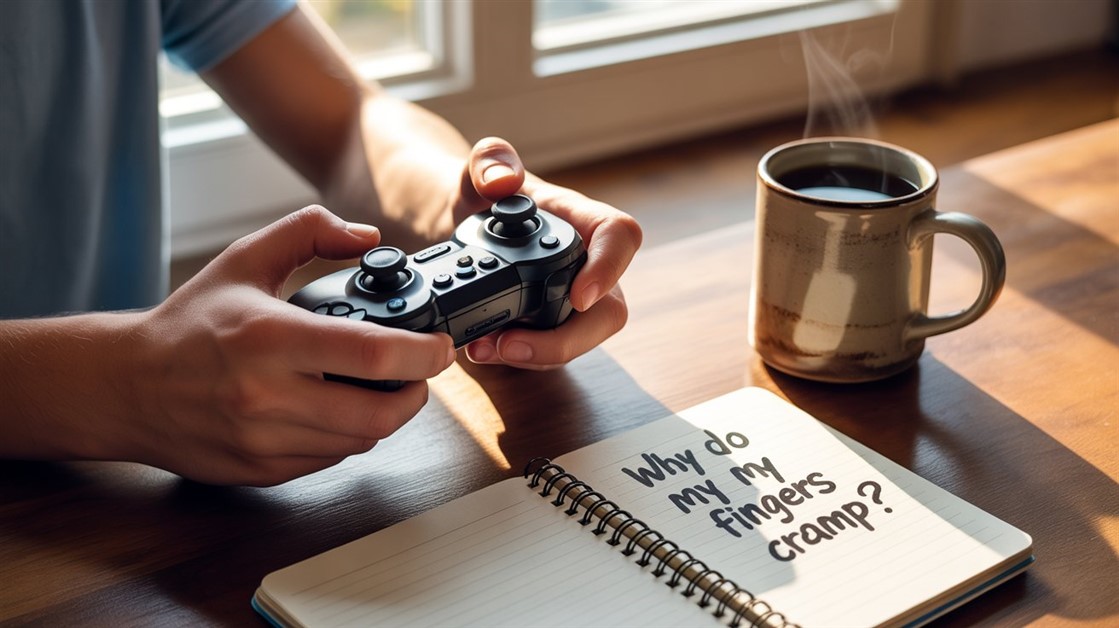
You're not imagining the pain, and it's not a skill issue. Most mainstream controllers are stubbornly built around an "average" hand size that most people simply don't have. If your hands are on the smaller side, you've been quietly fighting your hardware every session.
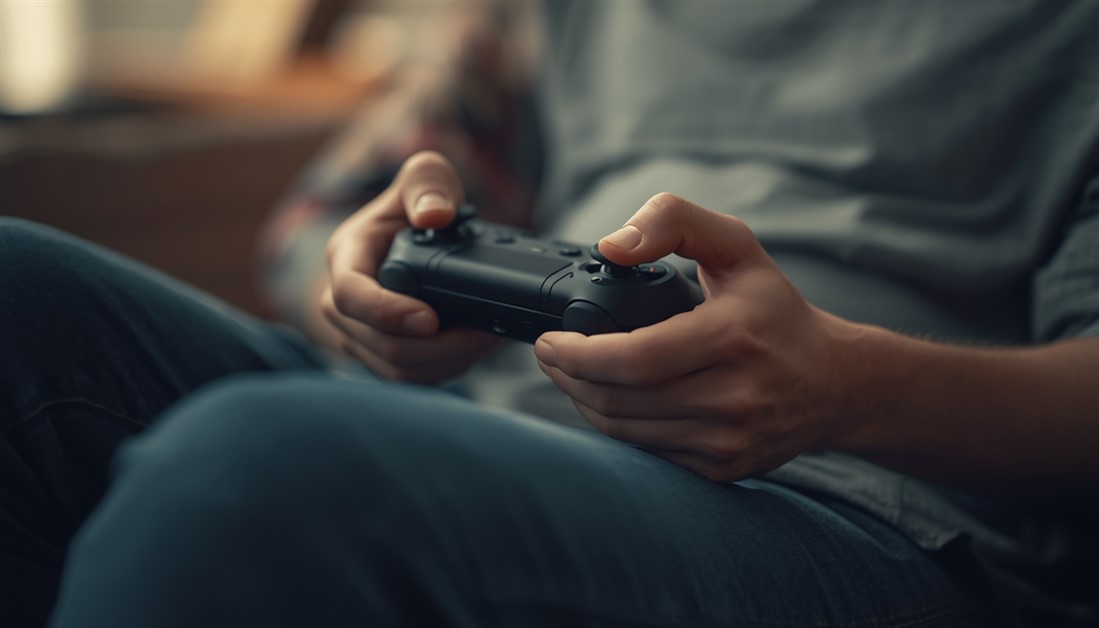
The result is predictable: thumbs overextended to reach joysticks, index fingers straining for bumpers, palms forced apart at an angle that builds tension instead of releasing it. After an hour you put the controller down and your hands hurt in a way you'd be embarrassed to explain to anyone who hasn't felt it.
What Small-Handed Gamers Are Actually Dealing With
In communities like r/GirlGamers, r/SmallHandsGaming, and various controller recommendation threads, the same complaints surface constantly. Owners of standard controllers describe having to completely shift their grip just to reach a bumper, losing control of their thumb position whenever they need to hit a face button at the same time as a trigger, and developing consistent pain in the web of skin between thumb and forefinger from holding grips that splay their hands outward.
The underlying issue is that mainstream first-party controllers — Xbox, PlayStation, Switch Pro — are calibrated for hands in a certain size range. If your hands fall below that range, no amount of grip adjustment fixes the fundamental geometry. You're working around a design that wasn't made for you.
The specific measurements that matter: grip width (how far apart the handles sit), thumbstick-to-thumbstick distance, and the distance from the thumbstick to the nearest shoulder button. Smaller hands need all three of these reduced, not just the overall body size.
What to Actually Look For
When evaluating a controller for smaller hands, three specs matter more than overall size:
- Grip width: Narrow grips mean your palms don't have to splay outward to hold the controller, which is the main source of sustained tension during long sessions.
- Thumbstick placement: The closer the sticks sit to each other and to the center of the controller, the less your thumbs have to extend outward to reach them.
- Shoulder button reach: If you have to shift your index finger's resting position to hit LB/RB or L1/R1, you're losing both speed and comfort. The bumpers should be within natural resting range without repositioning.
Weight matters too — a lighter controller means less sustained grip force over a long session. Every gram you're holding adds up over three hours.
Best Overall (Wired): Nacon Pro Compact
The Nacon Pro Compact is explicitly designed to be smaller than a standard Xbox controller — Nacon's own spec sheets confirm it. The grips are narrower, which stops your hands from splaying outward, and the overall form factor brings the face buttons and thumbsticks into a noticeably tighter arrangement. It's also meaningfully lighter than a standard Series X controller, which makes a difference during longer sessions.
Community feedback from small-handed gamers consistently praises the bumper placement specifically — owners describe it as the first controller where their index fingers naturally rest on the shoulder buttons without having to reposition. The included remapping software lets you adjust button assignments, and it ships with a Dolby Atmos license.
One honest note from reviews: the analog sticks, while closer together than on a standard pad, are still somewhat wide for very small hands. It's a clear improvement over first-party options, but it's not a perfectly compact layout across every dimension.
- The friction it removes: Bumpers, face buttons, and triggers all within natural reach range — no repositioning mid-session.
The reality check: Wired only. The cable runs about 3 meters, which covers most desk setups but won't reach from a couch to a distant TV. If you need wireless for your setup, the 8BitDo below is the alternative.
👉 Check Current Price → Nacon Pro Compact Controller
Best for Versatility (Wireless): 8BitDo Ultimate Bluetooth
If wireless is non-negotiable and you play across multiple platforms, the 8BitDo Ultimate Bluetooth consistently comes up in small-hands controller discussions as the compact wireless option that doesn't compromise. Its frame is noticeably narrower than standard first-party wireless controllers, with thumbsticks placed closer together — reviewers specifically note it feels natural for smaller hands without the thumb extension that Xbox or Switch Pro layouts require.
The Hall Effect joysticks are the other key feature: they use magnetic sensing instead of resistive contact, which means stick drift — the slow degradation that makes thumbsticks wander over time — is mechanically prevented rather than just delayed. For a controller you're investing in for comfort, that longevity matters.
It works on PC via 2.4GHz dongle, on Nintendo Switch via Bluetooth, and on mobile. A charging dock is included. Note: a newer generation (Ultimate 2) has since been released with updated wireless and refined triggers — worth comparing before buying if both are available at similar prices.
- The friction it removes: Compact wireless layout that works across PC, Switch, and mobile — one controller, multiple setups, no stick drift.
The reality check: The default button layout follows Nintendo style (B/A swapped relative to Xbox). On PC with Xbox button prompts showing in games, you'll need to adjust by muscle memory or swap the physical buttons in the companion app.
👉 Check Current Price → 8BitDo Ultimate Bluetooth Controller
Best Budget Pick: PowerA Nano Enhanced Wired
If you're not ready to spend $50+ on a controller before you know if a smaller form factor solves your problem, the PowerA Nano is the lowest-friction entry point. It's genuinely compact — noticeably smaller than any first-party controller — and light enough that sustained grip force stops being an issue entirely.
Owners with tendinitis or repetitive strain conditions frequently mention it in r/SmallHandsGaming threads specifically because the reduced weight removes the load that aggravates their symptoms. It's also cheap enough to try without significant risk.
- The friction it removes: The smallest available form factor at the lowest price — useful as a first test to confirm that a compact layout actually solves your cramp problem before investing in something premium.
The reality check: Budget build quality — it feels plasticky and light in the less-reassuring sense. Under heavy competitive use it may not hold up for years. Think of it as a proof of concept or a secondary controller rather than a main long-term option.
👉 Check Current Price → PowerA Nano Enhanced Wired Controller
The Real Metric: Thumbstick Reach
Of all the specs, the distance your thumb must travel from a neutral resting position to reach the thumbstick and face buttons simultaneously is the single most predictive measurement of whether a controller will cause fatigue. Controllers with narrower grip spans and closer-set thumbsticks consistently get better long-session feedback from small-handed owners — not just because they fit better, but because they eliminate the constant low-grade tension of reaching.
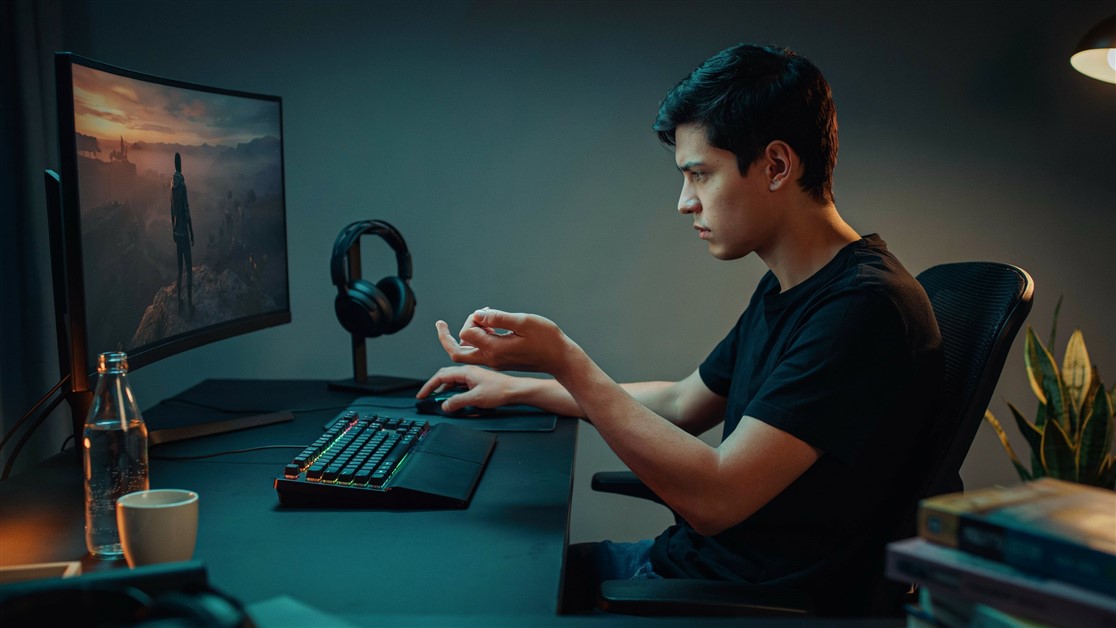
If you're also struggling with a gaming mouse that forces you into an uncomfortable claw grip, the guide on gaming mice for small hands covers that side of the setup.
FAQ
Why do standard Xbox and PS5 controllers cause hand cramps for smaller hands?
Standard first-party controllers are built around a hand size range that leaves smaller hands overextended to reach thumbsticks, bumpers, and face buttons simultaneously. That constant stretch creates sustained tension in the tendons of the thumb and the muscles across the palm — which accumulates into cramping and fatigue over a session.
Are third-party controllers reliable enough for daily use?
It depends on the tier. The 8BitDo Ultimate is widely regarded as durable and high-quality, with Hall Effect joysticks that mechanically prevent stick drift. The Nacon Pro Compact is officially Xbox-licensed and holds up well under normal use. The PowerA Nano is budget-quality — functional but not built for years of heavy use.
Can I use the Nacon Pro Compact on PC?
Yes. It's officially Xbox-licensed, connects via USB, and is natively recognized by Windows as an Xbox controller — no driver installation needed. The companion software for button remapping is available as a free download.
Is it worth paying more for Hall Effect joysticks?
For a controller you're buying specifically for long-term comfort, yes. Standard resistive joysticks develop drift over time as the contact material wears — you may start noticing it within a year of regular play. Hall Effect sticks use magnetic sensing with no physical contact, so the drift mechanism doesn't exist. If you're investing in a controller to solve a pain problem, stick longevity matters.
Your Hands Deserve Better
Enduring discomfort isn't a required part of gaming. The right controller disappears in your hands rather than constantly reminding you it's there — and once you've found that fit, you'll wonder how long you were compensating without realizing it.
Disclosure: We may earn a small commission if you buy through our links — at no extra cost to you. This helps us keep researching gear for real humans like you.
What's the longest you pushed through hand cramps before realizing your controller was the actual problem — not your grip, not your posture?


Discussion
(0)Be the first to share your thoughts.