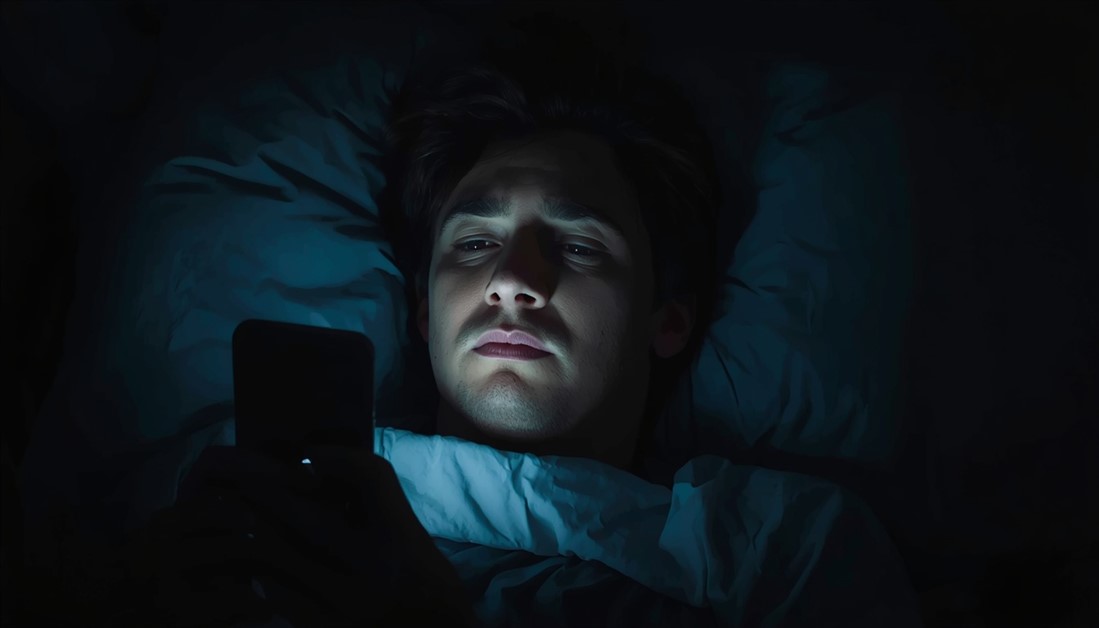
The order confirmation lands at 1:17am. By morning you'll wonder what you were thinking — but at 1:17am it made complete sense: you'd been eyeing it for weeks, the price looked right, and the gap between wanting it and owning it was exactly zero clicks.
This isn't a willpower failure. It's a timing problem, and every major shopping platform is built to catch you at the precise moment your resistance is lowest. The fix isn't trying harder at 1am — it's putting a few seconds back between the want and the buy.
What actually works
- On desktop: a purchase-delay browser extension — a forced wait before the site, or a hold on the cart.
- On your phone: an app-friction tool like One Sec — a pause before the shopping app even opens (where most late-night buys happen).
- Free, no app: delete your saved card — the one interruption that can't be bypassed in a weak moment.
- Skip all this if: you can window-shop at midnight and close the tab — you don't have this problem.
| Approach |
Best for |
How it interrupts |
The catch |
| Purchase-delay extension |
Desktop shopping |
A wait screen, or holds the cart for days |
Browser only; the category churns |
| One Sec (app) |
Phone shopping |
A pause before the app opens |
Small one-time cost |
| Delete your saved card |
Everyone, everywhere |
Adds card-re-entry friction |
You re-add it to buy on purpose |
Why midnight is when you lose
Two things stack up against you late in the day. The first is decision fatigue: the more choices you've made since morning, the worse your judgement gets at the next one. By late evening the part of your brain that weighs future consequences and overrides "buy now" has been running all day, and its brakes are genuinely worn thin — not just subjectively harder to use.
The second is how the impulse itself works. A quick purchase delivers a small, reliable hit of satisfaction — the browse, the find, the click, the confirmation email — and brains that are wired to chase that kind of stimulation (ADHD brains often are) feel the pull more strongly, exactly when the evening's fatigue has lowered the guard rails. (This is general information, not medical advice — if overspending is seriously hurting your finances or wellbeing, a therapist or a nonprofit financial counsellor can help in ways an app can't; compulsive buying is a real thing to take seriously.)
Then the platform meets you there. A saved card removes the friction of typing a number. One-click ordering removes the cart. Countdown timers, "only 3 left" labels, and recommendations that know your taste are all built to turn browsing into buying before any natural pause can happen. The system is working exactly as designed — it's just not designed in your interest.
Why a short delay beats a hard block
The consistent finding in research on impulsive buying is simple: a forced delay between the impulse and the action sharply cuts how often the purchase actually happens. It doesn't need to be long. Even half a minute — just enough to break the automatic slide from browsing to clicking — is enough to let the question the platform is trying to prevent finally surface: do I actually want this right now?
That's why the tools below add friction at the point of purchase rather than blocking shopping outright. Total blocks tend to fail for impulsive brains — the same determination that opens the shop at 1am also disables the block. A speed bump is far harder to route around than a wall, because you never have to fight it; you just have to wait.
The tools that add the pause
A purchase-delay extension — the desktop speed bump
Best for: people whose late-night shopping happens in a browser on a laptop.
Skip if: you almost always shop on your phone — a browser extension can't reach a phone app.
On a laptop, the thing that works is an extension that puts itself between you and the checkout, and there are two flavours worth knowing. The first drops a mandatory waiting screen in front of shopping sites: a short countdown you can't skip or click past, long enough to break the autopilot without feeling like a punishment. A good share of sessions quietly end during that wait — the urge was real, just not as urgent as it felt a moment earlier.
The second flavour doesn't guard the door at all; it intercepts the buy button and puts the item into a holding period you choose, so you simply can't complete the purchase until the hold expires. That one works with the short half-life of impulse interest: what you desperately wanted at 11pm on Tuesday is often forgotten by Thursday, and whatever survives the freeze is usually what you actually wanted.
Here's the honest reason we're not naming a specific one: this category churns badly. Extensions in it get abandoned, delisted, or quietly break after a browser update, so a named recommendation goes stale faster than almost anything else we cover. Search your browser's extension store for a purchase delay or put it on ice tool and judge it on the boring signals — updated recently, reviews from the last few months, and the smallest set of permissions that makes sense for what it does. The mechanism is what matters, not the brand: a wait, or a hold. Whichever you land on, it's browser-only, so anything you buy inside a phone app slips straight past it.
One Sec — the pause before the app opens
Best for: anyone whose impulse buys happen on a phone — the shopping app, the TikTok Shop link, the "shop now" on Instagram.
Skip if: you rarely shop on mobile and a browser tool already covers you.
The browser tools do nothing for phone shopping, which is where more and more late-night buying lives. One Sec is a phone app (a small one-time cost) that adds a friction step before you open any app you point it at: tap your shopping app and it shows a brief breathing or pause screen for a few seconds before letting you through. It sounds tiny, and it works for the same reason a delay screen does — it turns the tap-open-browse-buy reflex into a conscious decision, and it breaks it at the very first step. Because it works at the phone's system level, it covers every app you choose, including the shopping features baked into social apps.
👉 Try One Sec → One Sec
The free change that beats every app
All of the above work better alongside one behavioural change that costs nothing and can't be bypassed in a weak moment: remove your saved payment methods from Amazon and anywhere else you've got one-click or saved-card checkout. Re-entering a card by hand is no real burden for a purchase you actually mean to make — but it's exactly enough of a speed bump to stop a 1am one you'd regret. It needs no app, works on every device and browser, and holds even when your determination doesn't. You can always re-add the card; having to get up and find it is the entire point.
What doesn't work
Budgeting apps are the usual suggestion, and they're genuinely good for reviewing spending and setting intentions — but they don't interrupt a purchase in progress, they just report it afterward. The point of intervention has to be before the buy button, not in next month's summary. (If the tracking side is also a struggle for you, our guide to budget apps that don't shame spending covers that half without the guilt.)
Apps that block shopping sites entirely tend to fail for the same reason walls always do with impulsive thinking: the urge just reroutes to another browser, a phone, or a quick trip to the settings to switch the block off. Friction at the moment of purchase is harder to argue your way around than a barrier before the site. (Blocking has its place for work distraction, where the thing you're avoiding is the problem rather than the spending — we covered what actually holds up there in our guide to distraction blockers that work when you want to distract yourself.)
FAQ
Do these work on mobile shopping apps?
A purchase-delay browser extension only runs in a desktop browser — it can't touch native apps like the Amazon app, TikTok Shop, or Instagram shopping. One Sec is the tool built for exactly that: it works at the phone's system level and adds a pause to any app you choose. If your impulse buys mostly happen on your phone, that's the one that addresses the real problem.
Will deleting my saved card actually make a difference?
For a meaningful share of impulse buys, yes. Every extra step in checkout lowers completion — one-click ordering exists precisely because removing steps sells more, so restoring them sells less. Re-typing a card isn't enough friction to stop a purchase you truly want; it's often enough to stop an impulsive one.
Do spending limits by category help?
Category limits in banking apps or budgeting tools are useful for planning but don't interrupt a live purchase — you can set a monthly cap and still blow past it in a single session, because the limit is advisory, not a technical stop. The tools here work because they create an actual interruption at the moment of buying, not a soft rule you can override.
Is there anything that works specifically for ADHD impulse spending?
The friction-based approach fits ADHD well, because it doesn't depend on remembering to apply willpower in the moment — which is the exact thing that tends to get bypassed ("I knew I shouldn't, and I did it anyway"). A speed bump that can't be skipped automatically is far more durable than a rule you made for yourself. A countdown you have to sit through is genuinely harder to ignore than a mental note not to buy things after midnight.
A note on links: these tools are free or a small one-time cost, and these aren't paid or affiliate links — they're here because they fit the brief, not for a kickback. Browser extensions do come and go, so if one isn't available where you are, the mechanism matters more than the brand: a forced delay, a hold on the cart, or a pause before the app.
What's the most regrettable thing you've ordered after midnight — and did you keep it?






Discussion
(0)Be the first to share your thoughts.