Your To-Do List Is Judging You
You open the app. Twelve overdue items stare back at you in red. Three of them have been "overdue" since last Tuesday. You close the app. You'll deal with it later — or maybe never, because every time you open it you feel like a person who has failed at being a person.
The app isn't broken. It's just doing what it was designed to do: signal urgency, track slippage, create accountability pressure. For a lot of people, those signals motivate. For guilt-prone individuals, people with ADHD, or anyone whose schedule is genuinely unpredictable, those same signals create avoidance, shame, and eventually: abandonment. The task manager becomes one more thing you've failed at.
The tools below are built differently. They don't count what you didn't do — they just help you figure out what to do next.
Why Most Task Managers Make Things Worse
Standard task manager design optimizes for one type of user: someone with stable daily capacity who processes urgency cues as motivation. The mechanics that serve that user become friction for everyone else.
In threads on r/ADHD, r/productivity, and r/nosurf, the complaints form a consistent pattern. The most common: people describing their app as something they dread opening. Not because they don't want to be organized, but because they associate opening it with confronting evidence of how behind they are. The red overdue labels don't trigger action — they trigger the kind of paralysis that looks like procrastination from the outside.
The second pattern: incomplete lists as identity. When the app shows fifteen open items, the brain doesn't read "things to do." It reads "things I haven't done." Over weeks, a task list stops feeling like a plan and starts feeling like a verdict.
The third: no way to reset without starting over. Life gets chaotic — illness, a heavy week, a project that absorbed everything — and the backlog piles up. Most apps have no "clear the slate and restart" mechanism that doesn't feel like admitting defeat.
What "Guilt-Free" Actually Looks Like in Practice
Before choosing a tool, the design question that matters most is simpler than most people realize: what happens to a task when you don't complete it?
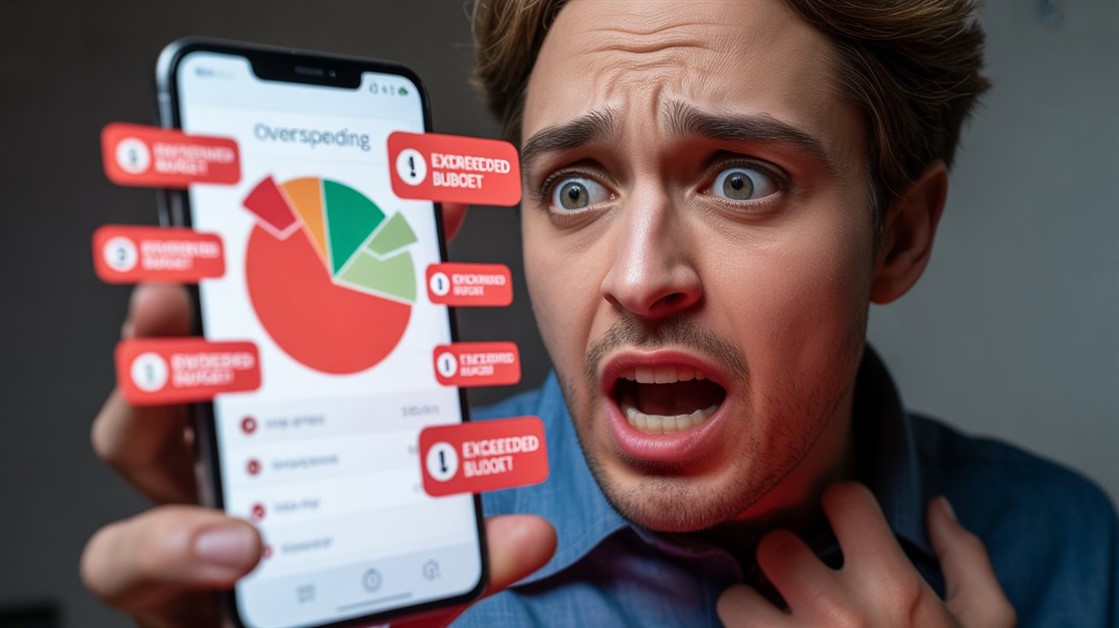
In punishing systems: it turns red, gets labeled "Overdue," and accumulates. In forgiving systems: it quietly rolls to tomorrow, or disappears from the active view until you decide to bring it back. That single design decision shapes whether you feel controlled by your task list or in control of it.
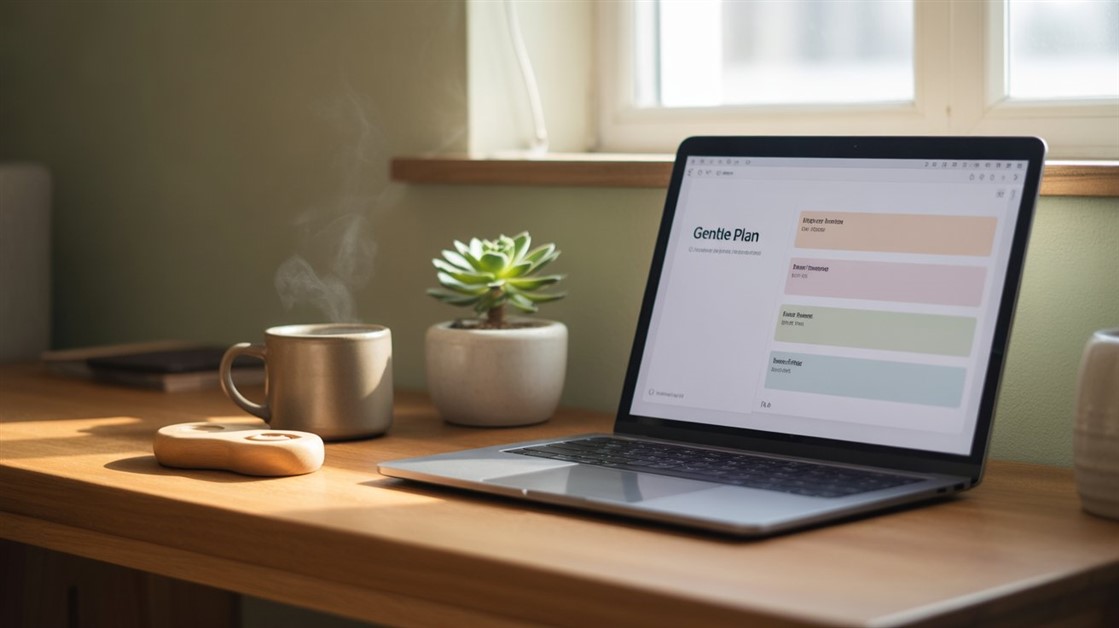
Other signals of a genuinely forgiving tool: no streak counters that reset when you miss a day, no performance dashboards that track completion rates, and no visual hierarchy that makes high-priority tasks feel like demands rather than choices. The best ones feel like a patient notepad, not a disappointed manager.
Best Gentle Daily Planner: Sunsama
Sunsama is built around a morning planning ritual that does something most apps don't: it shows you how much time you have before letting you commit to tasks. The "Plan Your Day" flow pulls tasks from your connected tools (Asana, Trello, Notion, email), and as you add items to your day, it shows a running total of estimated time against available hours. When you're about to over-schedule yourself, it tells you — before you fail, not after.
Tasks that don't get done roll forward silently to the next day with no label change. There's no red, no "overdue," no counter. You just see them again tomorrow and decide then. The shutdown ritual at the end of the day encourages reflection on what you actually did accomplish — an unusual move for a task manager, and one that repeatedly comes up in community discussions as the feature that changes how people feel about their productivity at the end of the day.
In discussions on r/ADHD and in therapist-written reviews of the tool, the recurring observation is that Sunsama is one of the few productivity tools clients describe as making them feel better rather than worse about themselves. The design philosophy — explicitly described as helping you "go home satisfied" — treats your daily capacity as the constraint to work around, not your willpower.
- The friction it removes: Over-scheduling before you start. Most guilt spirals begin with a list that was never realistic — Sunsama's time estimation catches that before it becomes a problem.
The reality check: Sunsama is premium-priced relative to competing tools — if the monthly cost is itself a source of financial stress, that undermines its purpose. It also requires a daily ritual commitment: it works best when you actually do the morning planning flow, not when you use it passively. If rituals feel like chores to you, the simpler options below may fit better.
👉 Try Sunsama → Sunsama
Best for Minimalists: TeuxDeux
TeuxDeux is as close as a digital tool gets to a paper planner without being one. It's a simple weekly view: days across the top, tasks listed underneath each. That's the entire interface. No priority flags, no tags, no integrations, no dashboards. If you don't finish something, it appears in tomorrow's column without any visual signal that it was "late." There's no difference between "planned for today" and "moved from three days ago" — it just shows up.
That design choice is almost defiantly gentle. The app has no mechanism to punish you for not finishing things, because it has no mechanism to track performance at all. It's a list that flows forward through time. Users on r/productivity who describe themselves as "recovering Todoist users" frequently mention TeuxDeux as the tool they switched to specifically to break the completionism habit — the need to check off everything and the shame when they don't.
There's also a "Someday" list at the bottom — a parking spot for things you want to do eventually but don't want cluttering your weekly view. It functions as the "somewhere safe" that most people create by burying tasks in a dated future day hoping they'll deal with them later.
- The friction it removes: The cognitive load of choosing between priority levels, tags, and projects. It's one list per day. Everything else is noise it refuses to generate.
The reality check: TeuxDeux has almost no features beyond the weekly list. No subtasks, no attachments, no integrations with other tools, no mobile offline mode. If you manage complex projects with dependencies or handoffs, it will fall short immediately. It's for personal tasks that live in your head, not work that involves a team or a project management system.
👉 Check TeuxDeux Plans → TeuxDeux
Best for Visual Thinkers: Tiimo
Tiimo was built by and for neurodivergent people from the beginning — not as a trend or a marketing angle, but as the founding design principle. Instead of a text list, it shows your day as a color-coded visual timeline: activities appear as blocks stretching across time, so you can see at a glance how your day is actually distributed and where the gaps are. Plans that look manageable as a list often reveal themselves as physically impossible when you see them laid out in time.
The app won the iPhone App of the Year award at the 2025 App Store Awards — notable because that recognition usually goes to consumer apps built for maximum general appeal, not tools designed specifically for ADHD and executive function challenges. Long-term users on Reddit report that the visual format makes time feel more tangible and planning feel less abstract. For people who struggle to estimate how long things take, seeing tasks as physical blocks creates a feedback loop that a list can't replicate.
Tiimo also includes "anytime" tasks — things that don't need a specific slot but shouldn't disappear. They sit available without taking up scheduled time, reducing the decision fatigue of choosing when to do something that could happen at any point in the day.
- The friction it removes: The abstract list that bears no relationship to your actual hours. Tiimo forces realism by design — you can't fit twelve items into a four-hour window if the visual blocks fill the timeline.
The reality check: Visual planning takes more setup than a text list. Building out your routines initially requires some configuration effort, and the experience is most valuable for people who plan significant chunks of their day. If you only have five tasks and no time constraints, the timeline format may feel like more structure than the situation needs.
👉 Explore Tiimo Features → Tiimo
The Power of the Reset
The most consistently valued feature across all three tools is some version of the same thing: the ability to let yesterday go. Tasks that roll forward quietly, days that begin clean rather than buried, plans that update around your current energy rather than demanding you catch up to where you were supposed to be.
That capacity to reset isn't a workaround for failure — it's a feature that acknowledges how real productivity actually works. Plans meet reality. Reality wins. A tool that helps you start from now instead of from behind is a tool you'll keep opening.
If your environment is also contributing to the focus problem — open offices, background noise, constant context-switching — the guide on best focus tools for open offices covers the environmental side of the same challenge.
FAQ
Why do regular to-do lists cause anxiety?
Traditional task apps use red text and "Overdue" labels to create urgency. For guilt-prone individuals or those with ADHD, this urgency triggers avoidance rather than action — the app becomes something to hide from rather than open. Tools designed without those signals remove the shame trigger entirely, which is often enough to break the avoidance loop.
Is a paper planner better than a digital one?
Paper planners are naturally forgiving because they can't turn red, send notifications, or track your completion rate. If digital apps consistently produce dread rather than clarity, a simple notebook is a legitimate solution — not a step backward. The best tool is the one you actually open. That said, digital tools that don't penalize you for missed tasks get much closer to the paper experience than most people expect.
How do I choose between Sunsama, TeuxDeux, and Tiimo?
Start with how many tasks you manage and how complex they are. Sunsama is the strongest fit if you juggle multiple work streams and want help choosing what to actually work on each day. TeuxDeux is the right choice if you want the absolute minimum interface — one list, one week, no decisions. Tiimo is built for people who think spatially and struggle with time estimation; if seeing time laid out visually would help you plan more realistically, it's the pick.
How do I stop feeling guilty about unfinished tasks?
The first step is separating the system from the result. A to-do list is a capture tool, not a binding contract. Switching to an app that rolls tasks forward without marking them as failures removes the daily confrontation with "what you didn't do." Over time, the backlog stops feeling like evidence of failure and starts feeling like a list of future options.
Kindness Beats Control
You wouldn't tell a friend they're failing because they didn't finish everything on their list. Your task manager shouldn't either. The right tool gives you a place to put things down without making you feel worse for not having done them yet.
Disclosure: We may earn a small commission if you buy through our links — at no extra cost to you. This helps us keep researching tools for real humans like you.
When was the last time you avoided opening your task manager just because you knew you were behind?







Discussion
(0)Be the first to share your thoughts.