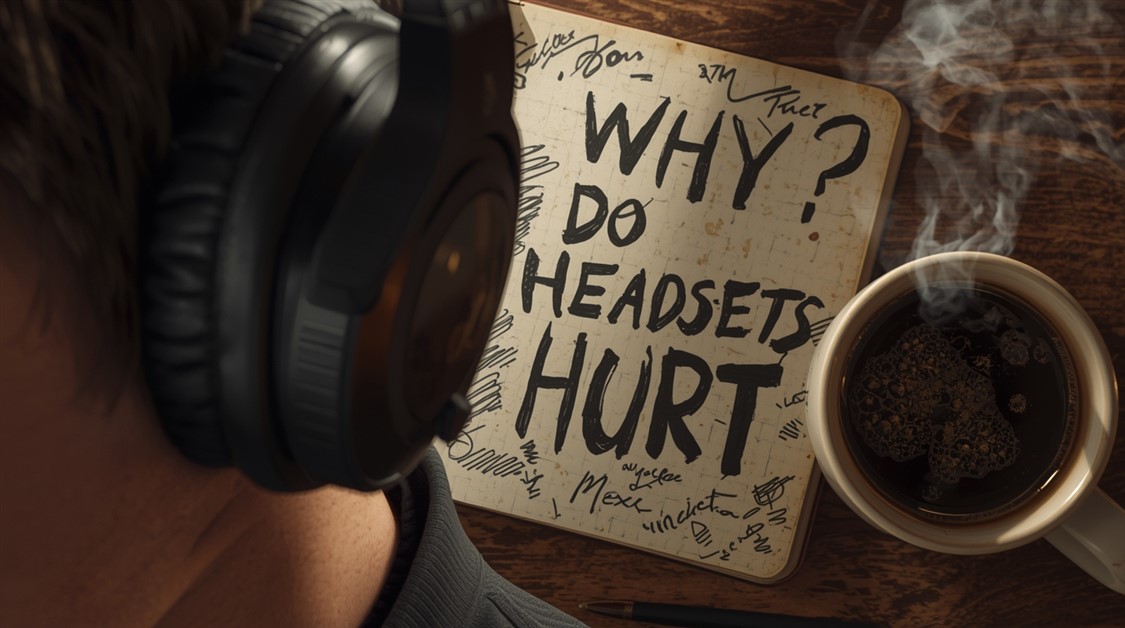
Big ears aren't the problem. Headsets built for an assumed "average" ear size are. If your ears stick out more than the cup depth allows, the driver housing contacts the ear — that's where the soreness and audio distortion both come from, and it starts within the first hour.
Sensitive skin adds another layer: most budget headsets use synthetic leatherette that seals against the skin and traps heat and moisture. That's a materials problem, not a hygiene problem.
What Big-Eared Gamers Are Saying
On Reddit's r/HeadphoneAdvice and r/GamingHeadsets, the complaints are consistent:
- "My ears stick out — every headset crushes them, even the 'premium' ones."
- "Leatherette cushions give me rashes after 30 minutes — velour or bust."
- "I can't find headsets with deep enough ear cups; mine touch the drivers and distort sound."
Amazon reviews on highly-rated gaming headsets echo the same pattern from actual owners:
- "Ear cups too shallow — my large ears press against the speakers, causing pain and muffled audio."
- "Synthetic leather gives me a rash every session. Switched to velour pads and it's a completely different experience."
- "Great sound, but headband pressure gives me a headache after two hours."
Why This Problem Exists
The cup depth problem: Most gaming headsets are designed around median ear measurements. If your ears protrude further or are physically larger, the driver housing sits too close — contact is inevitable. Once the ear presses against the driver, you lose both comfort and audio quality at the same time, because the seal that creates bass response is now compromised by the contact point.
The materials problem: Synthetic leatherette creates a sealed, non-breathing surface against the skin. During a long session, heat and sweat accumulate with nowhere to go. For anyone with sensitive skin, that's a direct irritation trigger. Fabric and velour don't have this problem because airflow moves through the weave instead of sitting trapped against the face.
Neither of these is obscure knowledge. They just aren't what most headset marketing leads with.
What the Reviews Show
After going through owner reviews specifically from people mentioning ear size or skin sensitivity — not just general comfort ratings — the pattern was consistent: cup depth matters more than padding material for big ears, and breathable fabric beats synthetic leatherette for sensitive skin every time. The headsets that keep showing up positively in these threads are the ones where depth and material were design priorities, not afterthoughts.
Best Gaming Headsets for Big Ears and Sensitive Skin
Best Overall: SteelSeries Arctis Nova Pro Wireless — Deep Cups, Swappable Cushions
- Why it works: The ear cups are deep enough to keep the driver away from the ear for most users, and the suspension headband distributes weight across the crown rather than clamping inward — two of the most common big-ear complaints, addressed by the base design rather than by cushion choice.
- Key feature: Swappable AirWeave fabric cushions included. The breathability difference versus standard leatherette is noticeable in long sessions — owners consistently report less heat buildup, and the cushions are genuinely designed to swap, not just compatible with aftermarket alternatives.
- Trade-off: Premium price, and the companion app takes longer to set up than a plug-and-play budget option. For someone who wants it working immediately out of the box, there's a learning curve on the first day.
Works on PC, PlayStation, and Xbox via dual wireless. ANC seals out background noise without adding noticeable clamping pressure. For users who've burned through cheaper options that kept irritating their skin, the material upgrade here is the main point.
👉 Check Current Price → SteelSeries Arctis Nova Pro Wireless
Best Budget Pick: HyperX Cloud Stinger 2 — Light, Deep Enough, Affordable Entry
- Why it works: The cups are generously sized for a budget headset — enough driver clearance that most big-eared users don't make contact the way they do with shallower budget options.
- Key feature: One of the lightest headsets in its class. For users where clamping force is the main pain point (not just ear size), the low headband pressure matters as much as cup depth.
- The catch: Ships with leatherette. For sensitive skin, aftermarket fabric pad kits from brands like Brainwavz are inexpensive and well-documented to fit this model — the swap takes a few minutes and cuts down heat buildup noticeably.
Wired only, with a bass-heavy sound signature that suits gaming more than music. A solid first step before committing to a premium option — and if the fit still doesn't work, the return window is easier to use at this price point.
👉 Check Current Price → HyperX Cloud Stinger 2
Premium Upgrade: Audeze Maxwell — Among the Largest Cups Available
- Why it works: The Maxwell has some of the deepest, widest ear cups on the gaming headset market, built around planar magnetic drivers that are physically larger than the dynamic drivers in most competitors. For ears that have failed to fit everything else, this is the option that keeps showing up in "finally found something that works" posts.
- Key feature: Gel-infused memory foam cushions. The gel layer pulls heat away from the contact surface, so the warmth buildup that typically happens after an hour is meaningfully reduced compared to standard foam with leatherette over it.
- Trade-off: Heavier than most gaming headsets — the planar drivers and robust frame add weight compared to lighter dynamic-driver options. For users sensitive to headband weight specifically, this is worth checking return policy on carefully before committing.
For anyone done with pain from shallow cups, the Maxwell is the ceiling of what's currently available in gaming headsets. The price reflects that.
👉 Check Current Price → Audeze Maxwell
Measuring Before Buying
Ear cup depth isn't a spec that most brands publish clearly. The most reliable approach: search owner reviews specifically mentioning ear size, or look for "big ears" in the Q&A sections on Amazon listings. A 30-day return window is worth more than any spec sheet when fit is the question — and it lets you test it through real sessions, not just an unboxing.
If you're also sorting out grip comfort, our guide to gaming mice for sweaty hands covers the same "it's a design issue, not a you issue" angle for grip material and palm shape.
FAQ
How do I know if it's the cup depth causing pain, or just clamping force?
Check where the pressure mark or soreness actually is after removing the headset. If the discomfort is at the ear itself — the outer ear pressing against the driver housing — that's a depth problem. If it's at the sides of the skull with no real contact on the ear, that's clamping force, which is sometimes fixable by gently bending the headband outward over a few days.
Do aftermarket ear pads actually fix a shallow-cup headset?
They help more with material irritation than with depth — switching leatherette for velour eliminates most skin sensitivity complaints, but most aftermarket pads add only a small amount of extra cup room. If the core problem is that your ear contacts the driver, a pad swap is a cheap first attempt but not a guaranteed fix the way a genuinely deep-cup headset is.
Is velour always better than leatherette for sensitive skin?
For most people with skin sensitivity, yes — velour allows airflow, leatherette doesn't, and it's the trapped heat and moisture that drives irritation rather than the surface material itself. The exception is if you need a strong acoustic seal for ANC or noise isolation, where leatherette performs better. Fabric trades some isolation for breathability.
Does the Audeze Maxwell work for both PlayStation and Xbox?
There are separate variants — the PlayStation version and the Xbox/PC version use different wireless protocols and aren't cross-compatible via the included dongle. The audio quality and comfort are the same either way, but buying the wrong platform version means the wireless won't work, so confirm your platform before ordering.
Ready to Game Without Pain?
If you're unsure about fit, buy from a retailer with a real return window — Amazon's 30-day policy is generous enough to test it through actual sessions before committing.
Disclosure: We may earn a small commission if you buy through our links — at no extra cost to you. This helps us keep researching gear for real humans like you.
Velour convert or still stuck with leatherette that's wrecking your ears — what's the specific irritation that finally made you switch?


Discussion
(0)Be the first to share your thoughts.