Chargers That Replace the Tangle of Bricks Living in Your Bag
Three chargers in your bag is two too many. One palm-sized GaN charger powers your laptop, phone, and tablet from a single plug — here's which one to actually buy.
Need a laptop that handles coding by day and gaming by night? We dug into reviews for programmer-gamers — power, portability, Linux support, no throttling.


Coding laptops skip the GPU. Gaming laptops are too loud and heavy for an office commute. If you need both in one machine, you're shopping in the gap between two product lines that were each designed for someone else — and most spec comparisons won't tell you whether a laptop handles the middle ground or just claims to.
On Reddit's r/SuggestALaptop and r/programming, the same complaints show up consistently:
Amazon reviews for "coding and gaming laptops" echo the frustration, even on highly-rated models:
Most "coding laptops" are optimized for battery life and thermals under light productivity loads — they don't carry the GPU headroom that gaming needs. Most "gaming laptops" are optimized for raw benchmark numbers, which means thicker chassis, louder fans, and shorter battery life that's incompatible with an office day.
Linux compatibility is the other gap: it's often an afterthought. A laptop that looks perfect on a spec sheet can have driver issues for the GPU, trackpad, or suspend behavior that take real time to debug.
Thermal throttling hits both use cases. Heavy compile jobs push CPUs hot enough to lose real clock speed, and GPUs running hot lose frames during gaming. A chassis that doesn't manage heat well means you're losing performance on both ends of the day. For programmer-gamers, controlling thermals isn't a gaming concern or a dev concern — it's both at once.
After going through owner reviews from people specifically using these machines for both development and gaming — not just one or the other — the pattern was consistent: the laptops that actually work for this use case prioritize efficient, controlled cooling over raw wattage. Quiet fans matter for café work. Portability matters for the commute. GPU performance only lands well when the thermals support it.
Weak point: gaming battery life. It's not a machine that lasts a full gaming session away from an outlet. A compact USB-C power bank covers the gap without adding much to your bag.
👉 Check Current Price → ASUS ROG Zephyrus G14
Linux runs well on the hardware, though checking your specific configuration against community compatibility notes before committing to a dual-boot setup is worth the time upfront.
For a closer look at how this class of machine handles remote and travel use cases, our breakdown of laptops for digital nomads who game covers the portability angle in more depth.
👉 Check Current Price → Dell XPS 14 14.5"
For someone switching between typing code and gaming on the same machine, keyboard feel matters in a way it doesn't for a single-use device. A keyboard tuned for actuation speed can feel different under extended typing than one built for productivity — and you'll notice that in a long coding session more than in a two-hour game session.
Port layout is underrated: single-sided ports create cable tangles in tight spaces. A machine with ports distributed across both sides keeps a café table or small desk actually usable.
For most programmer-gamers, yes — the picks above handle both well precisely because they're built around balance rather than maxing out one side. Where it breaks down is running a heavy local dev environment and a demanding game simultaneously; that's still better suited to a desktop. For sequential use — coding during the day, gaming in the evening — these machines are designed for exactly that.
It depends on how much of your dev work needs a native Linux environment versus what runs fine in WSL or a container on Windows. If you're doing systems-level work, dual-boot is worth the setup. If it's mostly web development, WSL handles most of the toolchain without the driver headache.
More than most spec sheets make clear. Running a code editor, browser tabs, Docker containers, and a game simultaneously eats memory fast. Prioritizing more RAM over a marginally faster GPU — if you have to choose between two similarly priced configurations — is usually the right call for a programmer-gamer's actual workflow.
For gaming, yes — frame rate smoothness is directly tied to refresh rate. For coding it matters less objectively, but high-refresh panels tend to be paired with better color accuracy and lower response time, which affects how comfortable the display is over a long session. It's worth having, not just a gaming spec.
If your current setup is making you work around throttling or swap between machines, it's worth upgrading rather than continuing to patch the gaps. Test it through real sessions — a compile run, a game, a day in a café — before committing long-term.
Disclosure: We may earn a small commission if you buy through our links — at no extra cost to you. This helps us keep researching gear for real humans like you.
Dual-boot Linux or sticking to Windows — what's actually been the bottleneck on your current setup, the coding side or the gaming side?
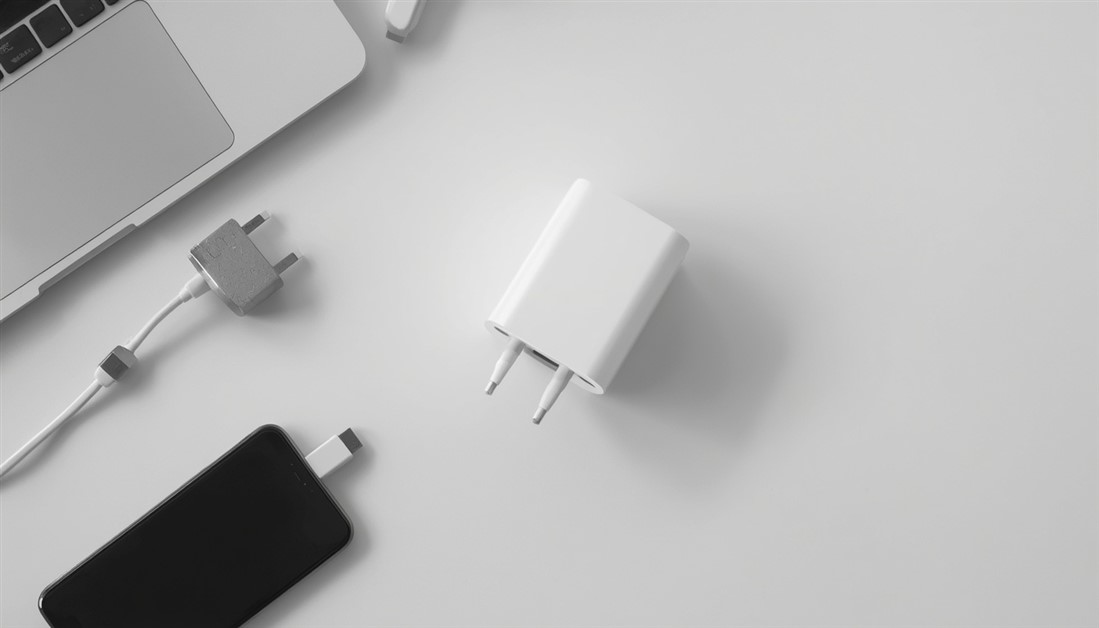
Three chargers in your bag is two too many. One palm-sized GaN charger powers your laptop, phone, and tablet from a single plug — here's which one to actually buy.

Your power bank has 20,000mAh on the box. It still dies by 3pm. Here's what's actually happening — and which power banks deliver on their rated capacity when your travel day goes sideways.
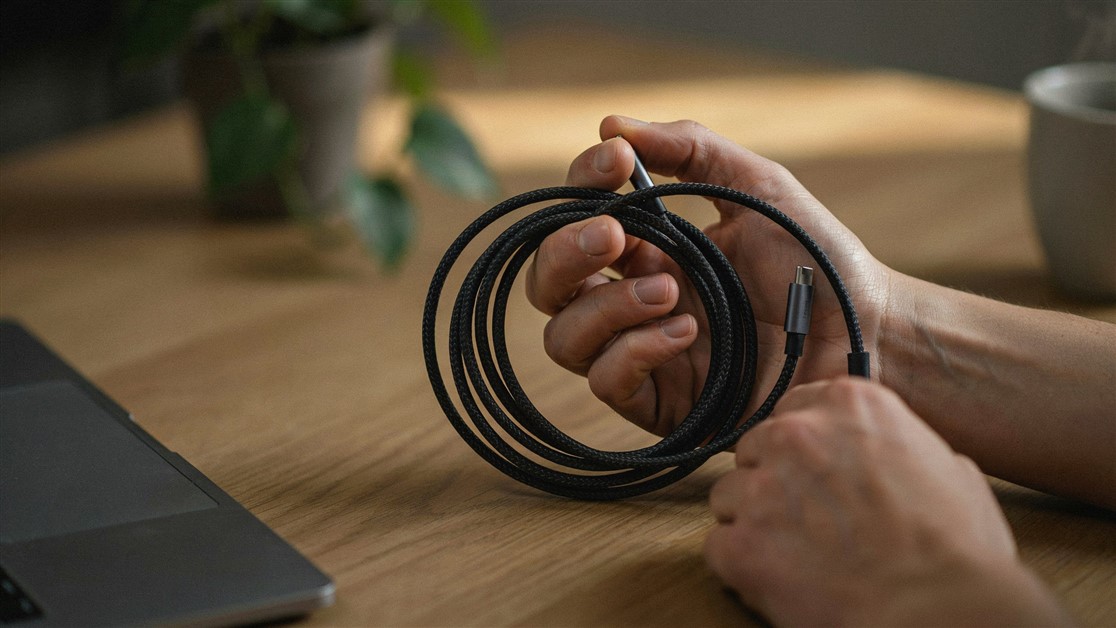
Your USB-C cable charged fine for a couple of weeks, then quietly died with no visible damage. That's not bad luck — it's thin wire and weak strain relief. Here's what actually survives daily use.

The gate changes, you've got ten minutes, and your charger is lost in the bag again. That's not disorganization — your accessories just live separately from the laptop they serve. Stick-on lid organizers put them on it.

Your drawer is full of notebooks with three good pages and a lot of blank ones. That's not you — paper is single-use. Reusable notebooks let you write, save what matters, wipe, and start fresh on the same book.
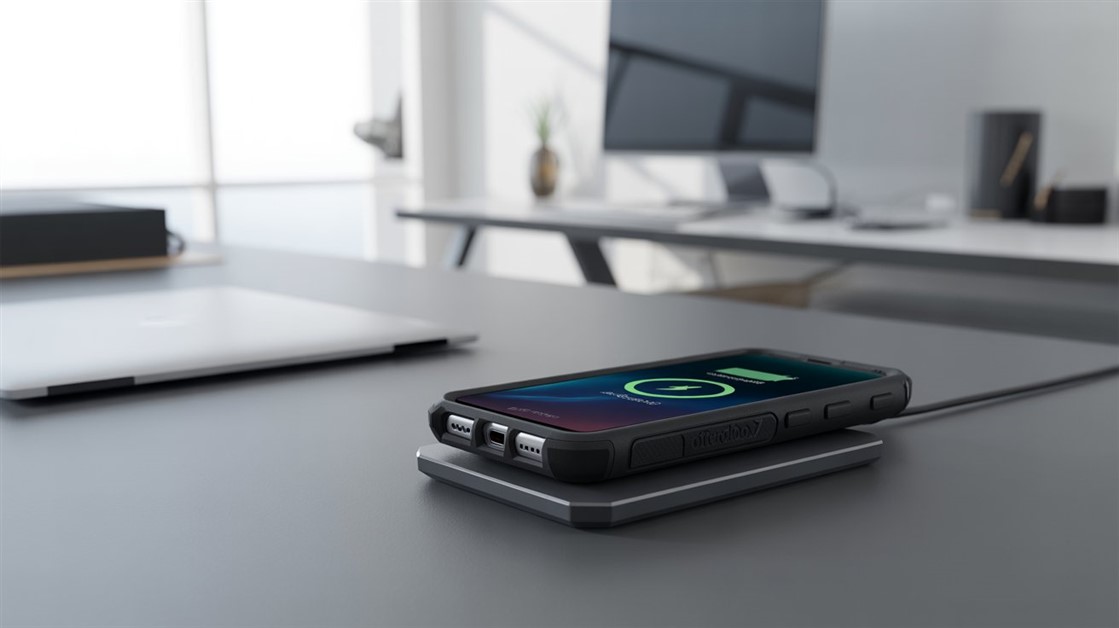
You peel your OtterBox off every night just to charge, and now the port's worn out. But rugged cases are built to charge wirelessly — if yours cuts out, it's usually the charger that can't reach through the case.

Your on-the-go videos shake because your tripod stays home. Here are the pocket-sized phone tripods small enough to actually carry — and steady enough to trust.

Adhesive privacy screens leave sticky residue and won't come off for Zoom. Magnetic ones snap on for café work and off in a second — here's how to pick one.
Discussion
(0)Be the first to share your thoughts.